
Introduction
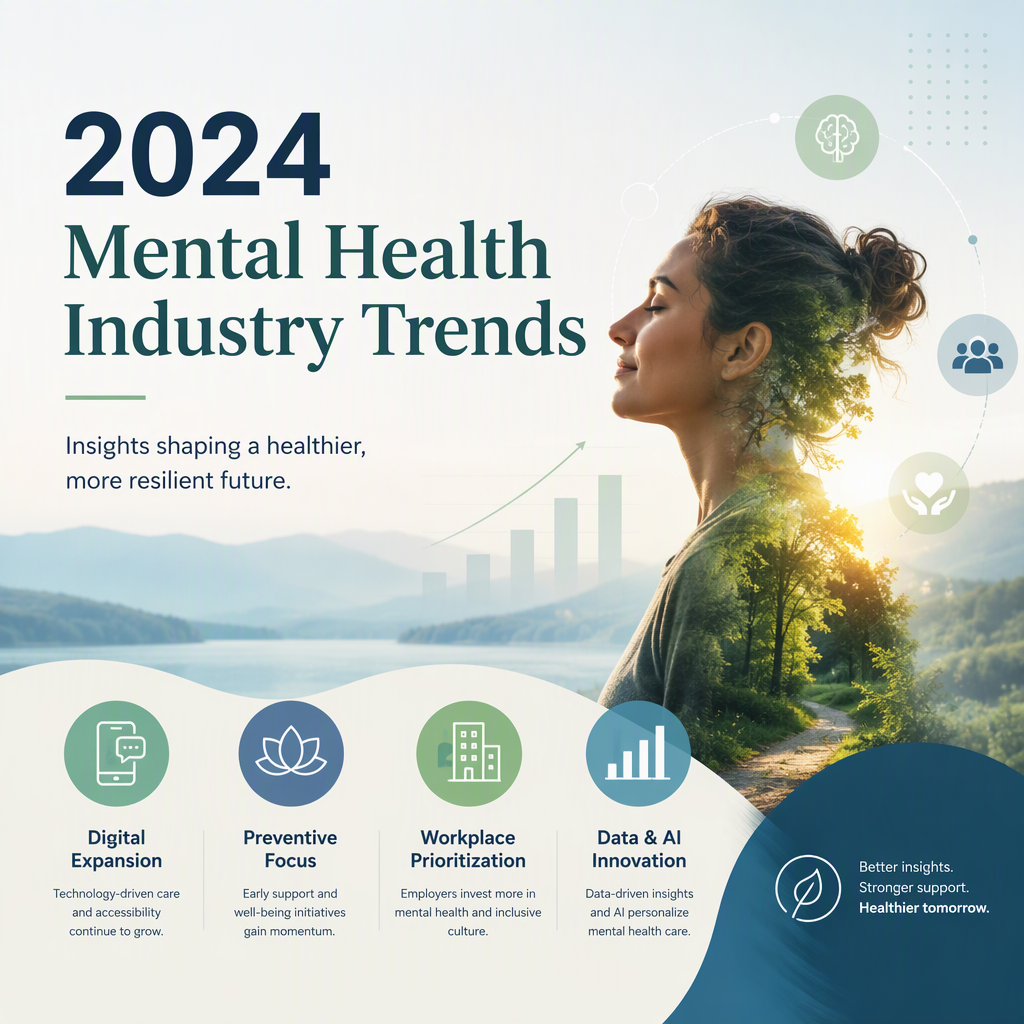
The mental health industry is undergoing a transformative shift in 2024. As global awareness expands and technology accelerates, organizations and care providers are rethinking how mental wellness is delivered, measured, and funded. For forward-thinking companies and practitioners, these trends represent not just challenges, but unprecedented opportunities to lead, innovate, and create lasting value in a market that is growing faster than ever before.
1. Digital Therapeutics and AI-Powered Care Are Mainstream
2024 marks the year digital therapeutics move from experimental to essential. With the increasing prevalence of smartphones and wearables, mental health solutions are being delivered through apps, virtual reality, and artificial intelligence—not as replacements for human clinicians, but as scalable extensions of care. AI algorithms now assist in early detection, personalized treatment plans, and real-time mood tracking, enabling interventions that are both proactive and precise.
Clinical-grade apps are gaining FDA approval and insurance reimbursement.
Generative AI is becoming a 24/7 first-line support tool for mild anxiety and stress.
Remote monitoring allows providers to adjust treatments based on real-world behavioral data.
2. Personalization Is the New Standard
One-size-fits-all mental health care is declining. In 2024, consumers expect treatment tailored to their genetic makeup, lifestyle, cultural background, and even digital behavior. Precision psychiatry, using biomarkers and data analytics, is helping clinicians select effective therapies faster. This shift not only improves outcomes but also builds stronger patient engagement and loyalty—a key competitive advantage for any mental health brand.
Providers must therefore invest in platforms that aggregate patient data securely and deliver adaptive, person-centered care. The message is clear: the future belongs to those who treat the whole person, not just the diagnosis.
3. Workplace Mental Health Moves from Stigma to Strategy
Employers now recognize that mental health directly impacts productivity, retention, and organizational performance. In 2024, workplace wellness is no longer a nice-to-have—it is a boardroom priority. Companies are expanding employee assistance programs, embedding mental health days into policy, and partnering with digital platforms to offer confidential and accessible support.
Leadership training now emphasizes psychological safety and empathy.
Mental health metrics are being integrated into HR analytics.
Hybrid work models are being redesigned to reduce burnout and social isolation.
Organizations that embrace this trend will not only attract top talent but also foster a culture of resilience that drives sustainable growth.
4. Holistic and Integrated Care Models Gain Traction
The boundary between physical and mental health is dissolving. 2024 sees a surge in integrated care clinics where primary care physicians, psychiatrists, therapists, and wellness coaches work side by side. This collaborative approach addresses the full spectrum of patient needs, reducing fragmentation and costly emergency interventions. Additionally, holistic modalities—such as nutrition, sleep optimization, mindfulness, and movement—are being formally incorporated into treatment plans.
For marketers, this means highlighting outcomes, not just services. Emphasize real-world results, patient testimonials, and measurable improvements in quality of life. Integrated care is a powerful story that resonates deeply with modern, health-conscious audiences.
Conclusion
2024 is a pivotal year for the mental health industry. The convergence of technology, personalization, workplace innovation, and holistic care is reshaping the landscape at speed. For forward-thinking businesses, the call to action is clear: adapt or be left behind. By aligning your services with these powerful trends, you can position your brand at the forefront of a sector that is not only commercially vibrant but also deeply human.
Now is the time to invest in the future of mental health—for the sake of your customers, your organization, and the communities you serve.